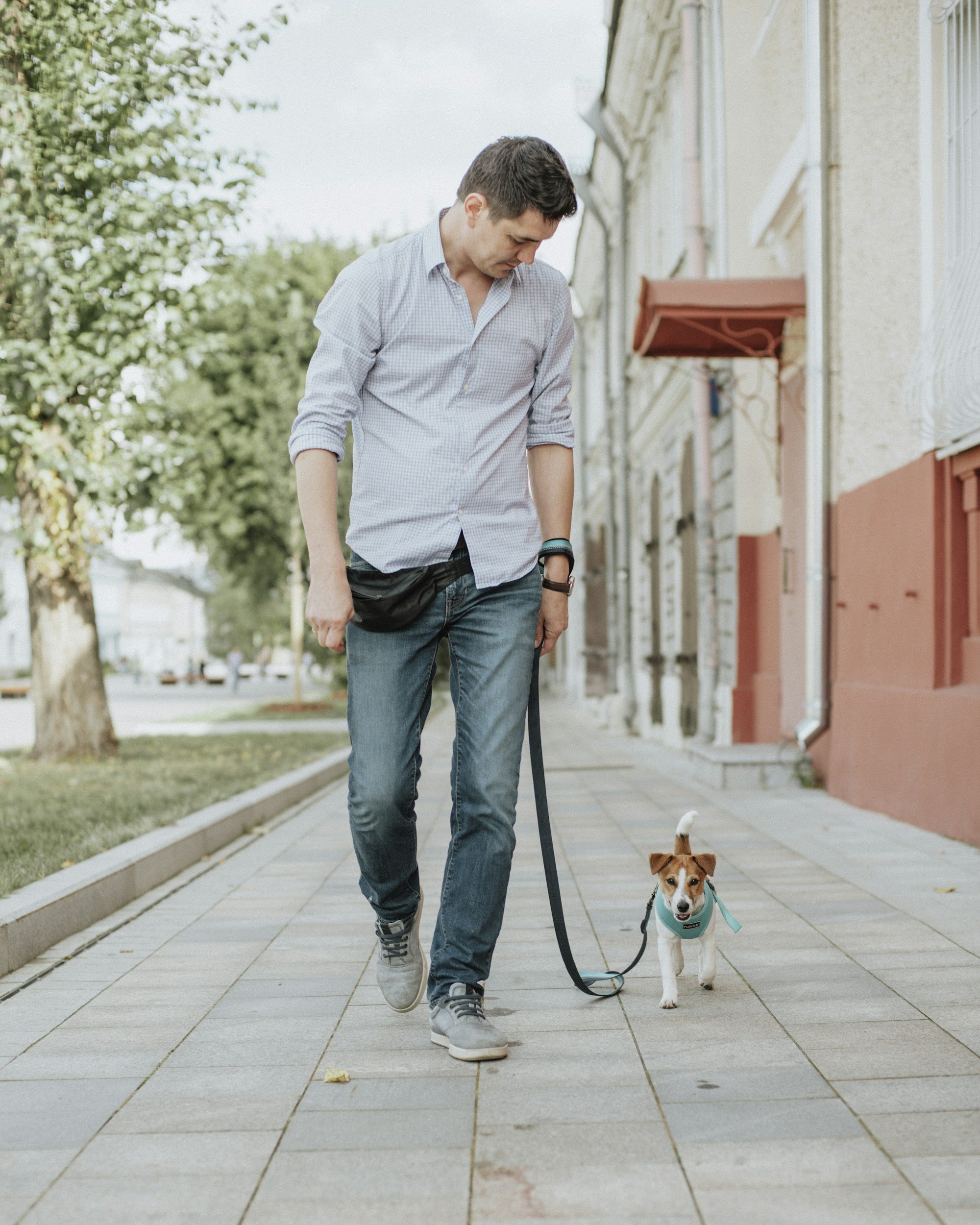
Loose Leash Walking Starts Before You Step Outside
A loose leash isn't something you demand. It's something you teach. And as an in-home dog trainer in Denver, it's one of the first things we work on — because it starts long before you ever reach the sidewalk.
1. Connection Comes First
Here's a question worth asking: Can you walk through your own living room with your dog calmly at your side, paying attention to you?
If the answer is "not really" — that's okay, and it's important information. Because if your dog can't stay connected with you inside your home, where it's quiet and familiar, it's going to be much harder outside where there are squirrels, cyclists, other dogs, and a thousand interesting smells competing for their attention.
Loose leash walking isn't just a leash skill. It's a relationship skill. And like any relationship, it starts with small, consistent moments of connection in a low-pressure environment.
Start here: Practice engagement exercises inside your home. Call your dog's name, reward eye contact, change direction and pace while moving through the house. Make paying attention to you fun and rewarding.
2. Picking the Right Tools
Once your dog is starting to connect with you indoors, it's time to think about what you'll use to walk together. And here's something important: there is no one-size-fits-all tool.
The right directional tool depends on your dog's size, their behavior, and your own experience as a handler. What works beautifully for a sniffy Basset Hound might not be right for a leash reactive dog or a powerful working breed. Whatever tool you choose, your dog needs to be properly introduced. Rushing the introduction can cause confusion and create a negative experience for your dog.
Not sure what tool is right for your dog? Our private dog training sessions in Denver are built around exactly this — finding the right approach for your dog, your household, and your goals. One training session can save you months of frustrating walks.
3. Teaching Leash Pressure
Here's where a lot of people get stuck: they get the right equipment, put it on the dog, and then expect it to do the work on its own. It doesn't. The tool is only useful when you properly lay the foundation.
The skill you need to teach is called leash pressure — and the best way to think about it is like a whisper.
Gentle, slow, incremental pressure on the leash is your way of saying "Hey — let's go this way." When your dog understands that pressure and moves with you, immediately release the tension and mark it with a "Yes!" and a treat.
Repeat this and something clicks. Your dog starts to realize they control the outcome — move with the leash, pressure releases. That's the foundation of direction and connection on leash. That sense of choice is what builds a dog that feels confident and connected, not just compliant.
4. Take It Outside
Once your dog understands leash pressure, can change direction with you, and can hold attention indoors — you're ready. You're not starting from scratch outside, you're transferring something your dog already knows into a new environment. Start in low-distraction outdoor spaces like a quiet street or your backyard, and build up gradually. Same principles: connection first, gentle pressure, reward the response.
5. Walk Together. Not Against Each Other.
Loose leash walking is achievable for every dog and owner — but it takes building from the inside out. If you're searching for dog training in Denver CO and want real, lasting results, I’d love to work with you.
Once you master the connection at home, pick the right tools, and teach the language of the leash, the walk becomes something you both actually enjoy!